If you live in New Center, you've watched the steel skeleton climb over West Grand Boulevard all year. In May, Henry Ford Health topped out the frame for its new 20-story patient tower, the most visible piece of a project called Destination: Grand. Twenty stories is hard to miss from Second Avenue, and by now most people who walk or drive past it daily have some version of the same thought: something big is happening here.
That's true. But the tower isn't actually the story that will change how New Center feels day to day for the next three years. The story is a building two blocks away that isn't under construction at all, and that most residents haven't been watching because nothing about it looks like news yet.
What the Crane Actually Tells You
Start with what's confirmed. The tower will run about 1.2 million square feet, house 432 private patient rooms, and include a 75,000-square-foot emergency department, roughly double the size of the current ER across the street. Five floors are set aside for intensive care, three more for a rehabilitation partnership with Shirley Ryan AbilityLab. It's the single largest piece of the $2.2 billion Destination: Grand expansion, which is itself the anchor of a broader $3 billion partnership among Henry Ford Health, the Detroit Pistons, and Michigan State University called Future of Health: Detroit.
Here's the part that matters if you're not a patient or an employee: occupancy isn't expected until 2029. That means the scaffolding, the lane shifts, the crane you see from your window are the visible, loud part of a project that won't actually change your daily routine for years. It's construction as atmosphere, not construction as answer. The tower explains the noise. It doesn't explain what New Center will feel like to live in next year, or the year after.
For that, you have to look at a building that already exists, fully built, sitting a few blocks south, that almost nobody outside a small circle of Detroit real estate reporters has been paying attention to.
The Building Nobody's Watching
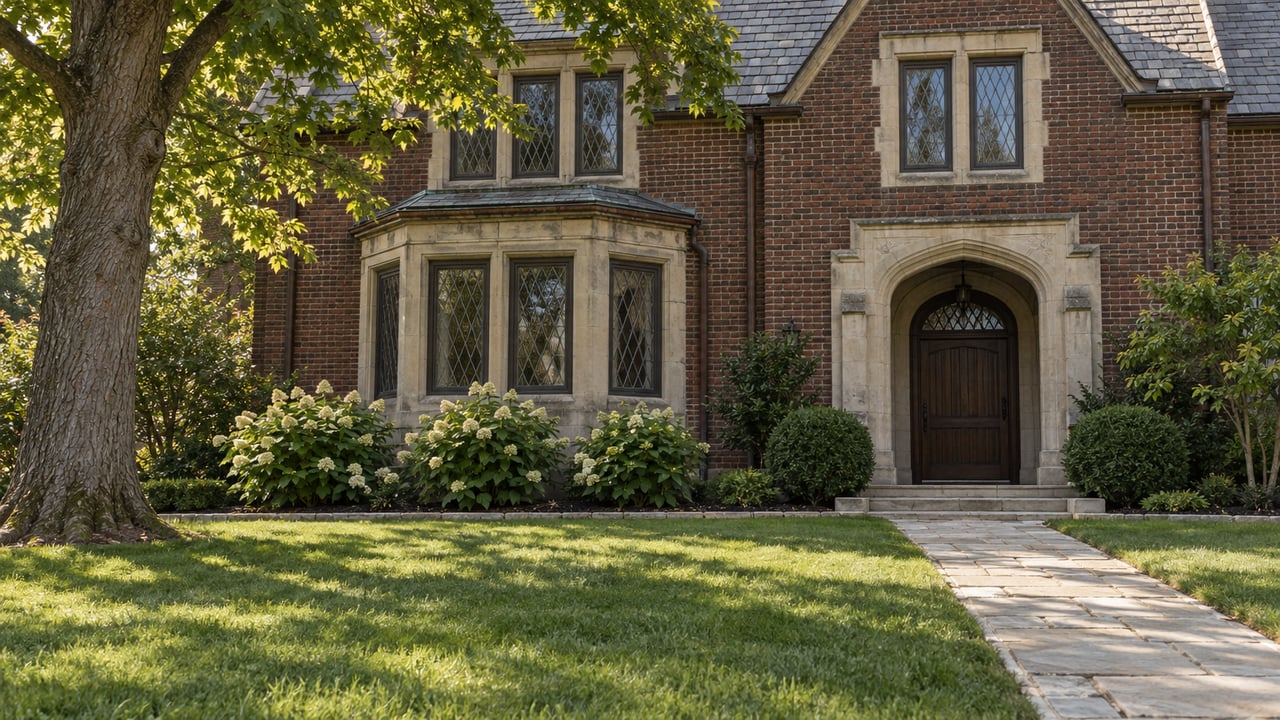
Cadillac Place opened in 1923 as General Motors' world headquarters. Albert Kahn designed it in the neo-classical style that made New Center's two landmark buildings, Cadillac Place and the Fisher Building across the boulevard, into a matched pair that defined the neighborhood's skyline before either one had a tenant that wasn't automotive. GM ran its global operations out of Cadillac Place for 73 years, until it relocated downtown to the Renaissance Center in 1996. Since then, the building has functioned mostly as Michigan state government office space, a respectable second act for a National Historic Landmark. It is not physically empty; what it lacks is an anchor tenant with the neighborhood-defining role GM once played.
That may be about to change. In August 2026, Henry Ford Health confirmed it's exploring Cadillac Place as a possible site for its new administrative headquarters. The health system hasn't committed to anything and won't say how much it might invest or when a decision might come.
"We continue to look for suitable spaces for our headquarters," said Lauren Zakalik, the health system's associate vice president of external communications strategy, in a statement to the Detroit News.
That's a cautious sentence, and it's worth reading it as cautiously as it was written. Nothing is signed. But the fact that Henry Ford Health is even touring a building that GM abandoned three decades ago tells you something the hospital tower doesn't: the real reshuffling in New Center isn't about new square footage going up. It's about which century-old landmark gets a new anchor tenant, and which one gets converted into something residential entirely.
Why the Old Headquarters Is Emptying Out
The reason Henry Ford Health is even looking for a new home is that its current one, One Ford Place, is going away as office space. The 610,000-square-foot building on Second Avenue, originally built for the Burroughs Adding Machine Company and also designed by Albert Kahn, has served as Henry Ford Health's corporate headquarters since the health system bought it in 1992. Under the Future of Health plan, it's being converted into 403 mixed-income apartments plus 17,000 square feet of retail and commercial space. That conversion is what's forcing the headquarters search in the first place, and it's part of a pattern that's easy to miss if you're only looking at the hospital tower.
Look at what else has already changed hands or use over the past three years. In 2023, Michigan State University became the majority owner of the Fisher Building, the other half of New Center's original Art Deco pair. MSU is also building a 335,000-square-foot research facility as part of Future of Health, expected to open in 2027 and home to the Nick Gilbert Neurofibromatosis Research Institute, funded in part by a $375 million commitment from the Gilbert Family Foundation. Meanwhile, older industrial buildings nearby are being converted too: 450 Amsterdam Street, once the main assembly plant for the Cadillac Motor Car Company, became 90 lofted apartments in 2025, a fifth of them designated affordable. A block over, 725 Amsterdam added a six-story, 154-unit mixed-income building.
None of these are new construction in the way the hospital tower is. They're all existing landmark or industrial buildings changing what they're for. That's the actual mechanism driving New Center's transformation right now, not steel going up, but ownership and use changing hands inside buildings that have stood for a century.
The Pattern, Laid Out
If you strip away the individual headlines, the sequence looks like this:
- 1923: Cadillac Place opens as GM's world headquarters
- 1996: GM relocates downtown, Cadillac Place becomes Michigan state office space
- 1992: Henry Ford Health purchases One Ford Place as its corporate headquarters
- 2023: MSU becomes majority owner of the Fisher Building
- 2025: One Ford Place conversion begins, targeting 403 apartments
- August 2026: Henry Ford Health confirms it's exploring Cadillac Place as its new headquarters
Read that way, New Center's next few years aren't defined by a single big project. They're defined by an unusually fast round of musical chairs among the neighborhood's landmark buildings, with a health system, a university, and a state government all repositioning inside structures none of them originally built. That's a different story than "there's a hospital expanding," and it's the one that will actually determine what kind of neighborhood New Center becomes, mixed-income residential in its old office stock, or still anchored by large institutional tenants who happen to be different institutions than the ones who built the place.
What Isn't Moving
None of this touches the parts of New Center that make it a place to actually live rather than a project to track. Northern Lights Lounge still runs its regular Friday DJ nights, and Wednesdays still belong to a jazz set that leans into hip hop and R&B. Baobab Fare, the East African restaurant that's picked up James Beard recognition since it opened, and YumVillage, serving Caribbean food a few blocks over, are both still doing what they've been doing. The Comerica TestFest still takes over the streets every Fourth of July weekend with food and music, the way it has for years.
That continuity matters as context for everything else. The buildings are changing owners. The neighborhood's actual rhythm, who's playing where on a Friday night, where you get dinner, what the summer street festival looks like, hasn't moved at the same pace, and there's no indication in anything Henry Ford Health, MSU, or the city has said that it's about to.
What to Actually Watch
If you live here, the crane over West Grand Boulevard is going to keep being loud for a while, and it's not telling you much you didn't already know: something is being built, it's big, and it'll be a hospital when it's done in 2029. The more useful thing to watch is quieter. It's whether Henry Ford Health actually signs on Cadillac Place, what happens to the state offices currently inside it if they do, and how the One Ford Place apartment conversion prices out once leasing starts. Those decisions, not the tower, will tell you what New Center is turning into.
If you're trying to make sense of what any of this means for your own plans in the neighborhood, whether that's a renovation, a sale, or just understanding what your property is worth in a district this actively in motion, City Living Detroit has been tracking New Center and the rest of Detroit's core neighborhoods closely. Schedule a consultation if you want a second set of eyes on what's actually changing around you.