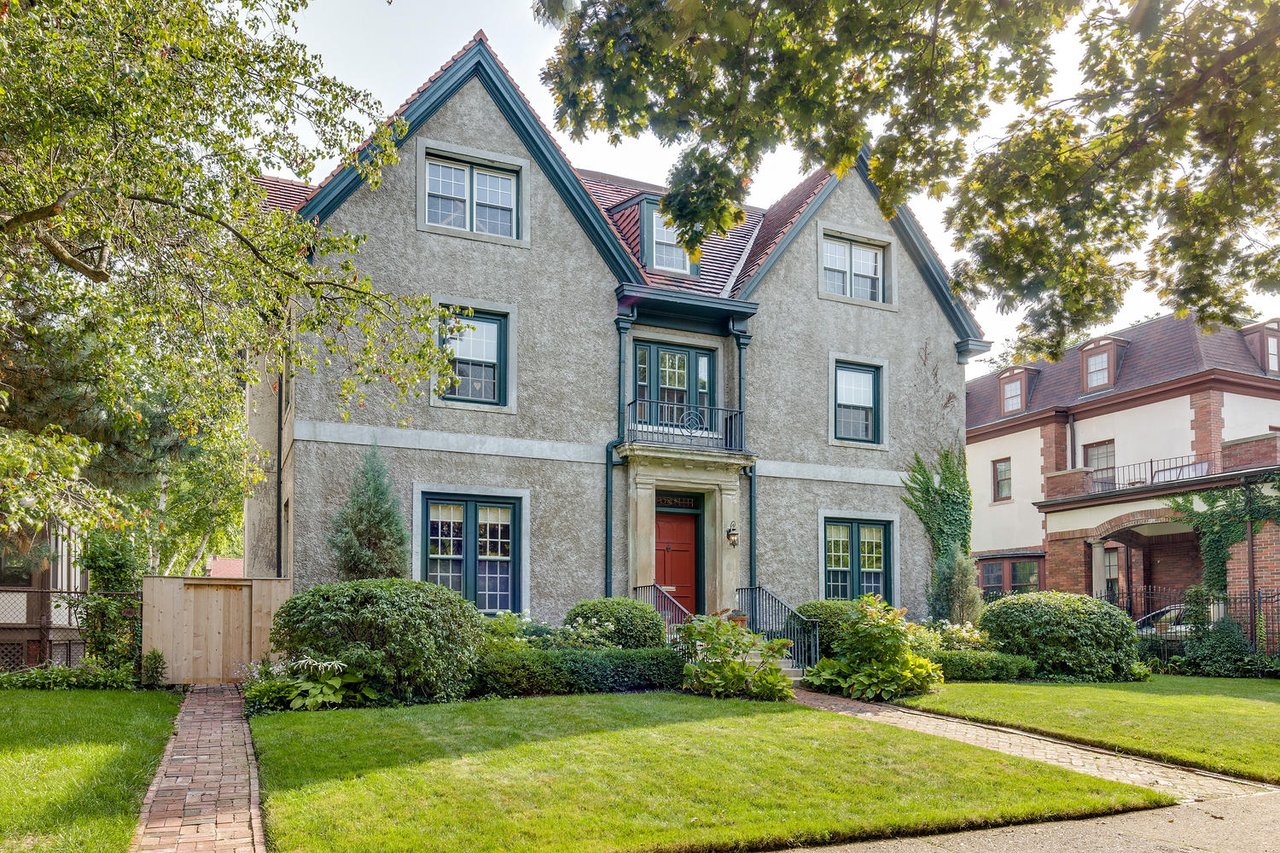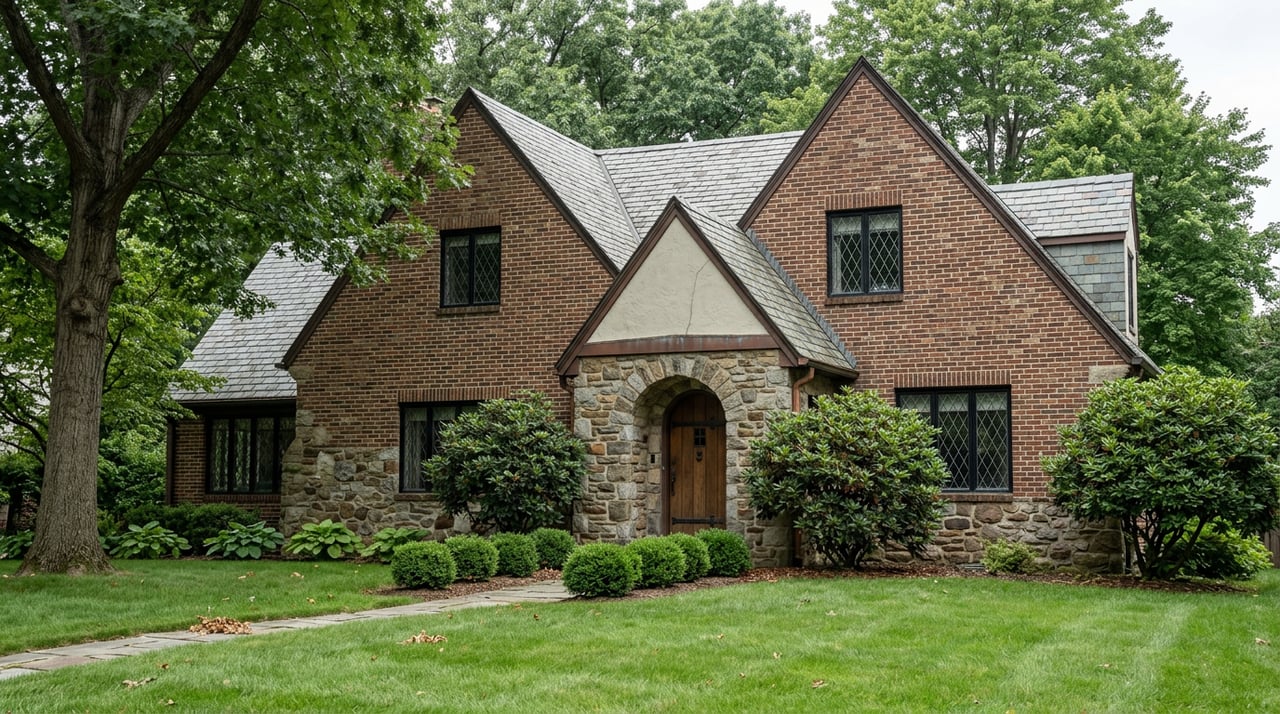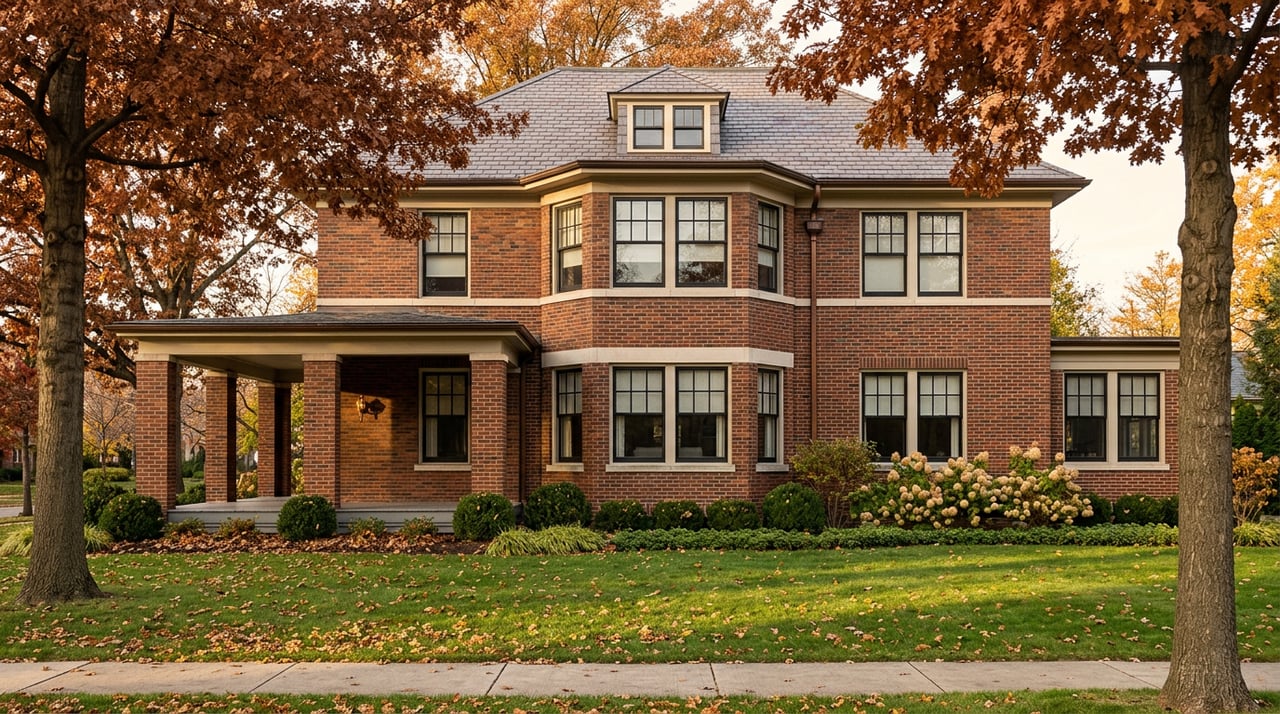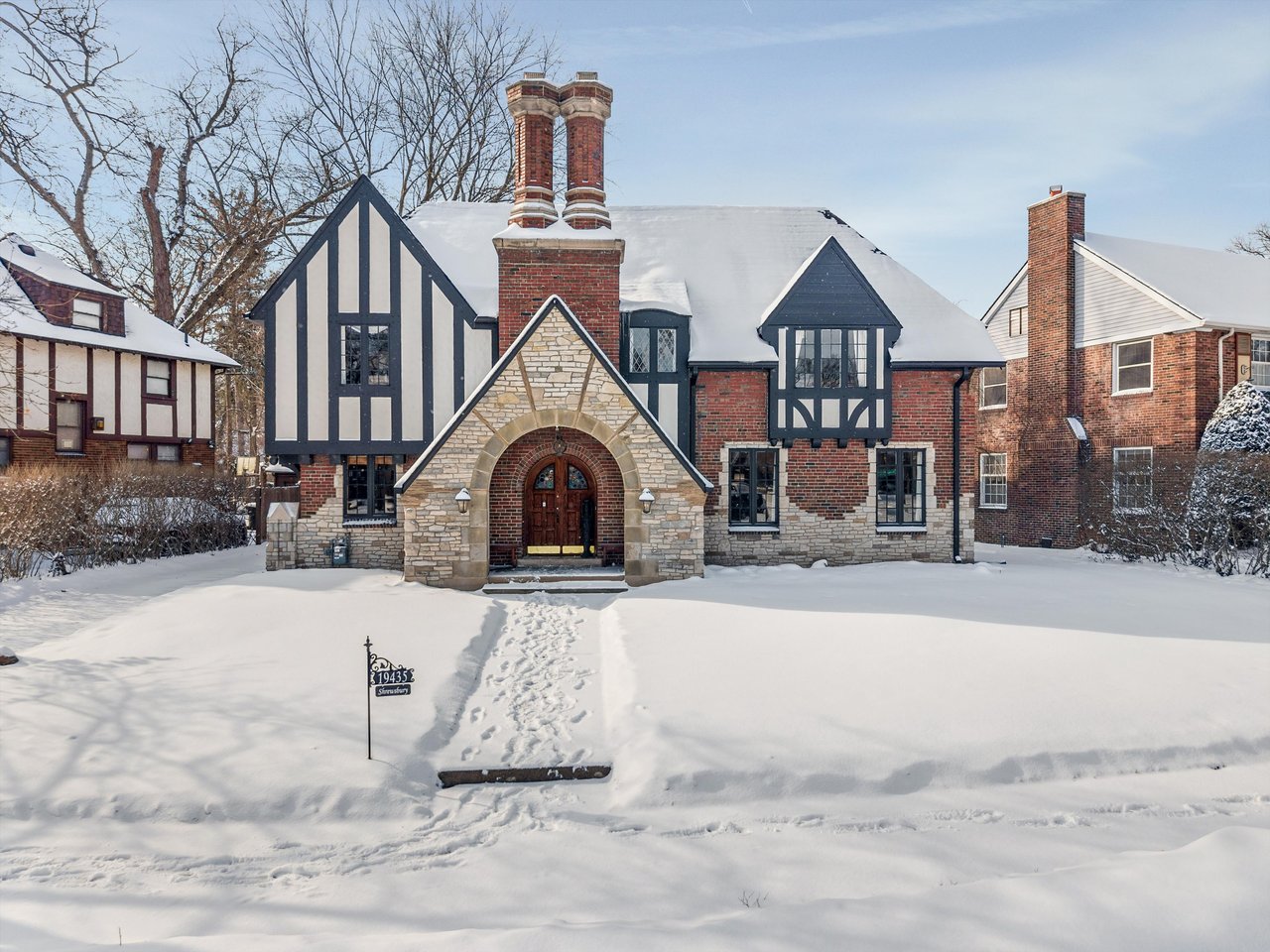
A parcel on Sherbourne Road went pending this year at $35,000. A few doors down the same street, a turnkey Tudor with crown moldings, a gas fireplace, and a newly finished roof asked $575,000. Both sit inside the same half-square-mile historic district, platted before the Depression, protected by the same 2002 local historic designation. If you tried to average those two numbers into a single "median home price" for Sherwood Forest, you'd get a figure that describes neither property and misleads anyone using it to plan an offer.
That's roughly what's happening right now with the headline numbers circulating for this neighborhood.
Two readings of the same market
As of March 2026, one major portal put Sherwood Forest's median sale price at $440,000, down 19.3 percent from a year earlier, with price per square foot falling even harder, down 36.6 percent to $97. A second portal's more recent snapshot showed a close but not identical figure: a $450,000 median, down 17 percent year over year, though it noted homes here were moving in 44 days on average, faster than the 58-day national pace.
Meanwhile, a rolling three-month look at closed transactions from April through June 2026 told a different story entirely: typical home values up about 5 percent year over year, sellers netting close to 99 percent of asking price, and only 2.5 months of supply on the ground, tighter than the broader Detroit market, where inventory runs far higher. By that measure, Sherwood Forest was holding value while the city's median edged down.
Source and window | What it measured | What it showed |
|---|---|---|
March 2026 sale prices | Median sale price | $440,000, down 19.3% YoY |
March 2026 sale prices | Price per square foot | $97, down 36.6% YoY |
Second portal, most recent snapshot | Median sale price | $450,000, down 17% YoY |
April to June 2026 transactions | Typical home value | Up about 5% YoY |
April to June 2026 transactions | Sale-to-list ratio | Just under 99% |
April to June 2026 transactions | Months of supply | 2.5, tighter than citywide Detroit |
None of these numbers are wrong. They're just measuring a market too small to behave like a normal one.
Why one sale can move the whole market
Sherwood Forest has roughly 435 homes total, laid out across two original subdivisions platted in 1916 and 1926. In the most recent 30-day period tracked by one portal, exactly one home closed. At that pace, a single distressed sale, a single estate sale, or a single unrenovated property changing hands can swing the median by tens of thousands of dollars and the price-per-square-foot figure by double digits, simply because there's no volume to average it against.
That's the mechanism behind the contradiction above. The declining median isn't proof that Sherwood Forest is losing value. It's proof that a handful of transactions in a fixed-stock, 435-home district can produce a headline number that says the opposite of what the tight supply and near-asking sale prices are actually showing.
What the real listings say
Look past the median and the individual comps tell a more consistent story, one where restoration stage and lot size, not square footage alone, explain most of the spread.
A 5-bedroom home on Renfrew sits on a 0.69-acre lot, nearly triple the size of a typical Sherwood Forest parcel, with French Provincial detailing that gives it the feel of a private chateau. At 4,315 square feet and priced near $750,000, it works out to roughly $174 a square foot.
A block away, a smaller 4-bedroom on Renfrew, just 3,228 square feet, listed for $600,000, or about $186 a square foot, more per square foot than its larger neighbor.
A 5-bedroom on Berkeley Road, 3,492 square feet, listed at $500,000, comes in lower still at roughly $143 a square foot.
None of those figures come close to the neighborhood-wide $97 per square foot that showed up in the March median. That gap is the tell. The homes buyers are actually competing over, the finished, livable, architecturally intact ones, are pricing well above the aggregated average. The average is being pulled down by something else in the mix, likely a restoration-stage property or a distressed parcel like the one on Sherbourne, not by a broad decline in what finished homes are worth.
The restoration-stage side of the ledger has its own story. One property on Sherbourne, undergoing what its listing called an exceptional restoration, offers more than 4,600 square feet of finished living space with dual staircases and refinished hardwood floors throughout, a very different proposition from a move-in-ready home even at similar square footage. A separate listing on Shrewsbury Road traces back to 1929, designed by architect Richard H. Marr for original owner Lewis C. Miller, with an original tile foyer and three fireplaces intact, the kind of provenance that carries its own premium regardless of what the neighborhood median says that month.
Active vintage listings across the district recently carried a median asking price of $575,000, but sat on the market for around 79 days, longer than the 44-day average cited for the broader current pool of listings. That gap between the vintage segment and the overall pace is itself a signal: restoration-stage and architecturally distinct homes take longer to find their buyer, and pricing them off a blended median will almost always miss.
What to check before you anchor on a number
If you're comparing Sherwood Forest against a neighboring historic district like Palmer Woods or University District, or deciding what to offer or ask here, the median is the wrong starting point. A few things matter more:
- Restoration stage. Is the home turnkey, partially restored, or a project? Two homes with identical square footage can be worth very different amounts depending on how much of the work is already done.
- Lot size relative to the neighborhood norm. A 0.69-acre parcel is an outlier here, not the standard. Confirm what a typical lot looks like on that specific street before comparing price per square foot across listings.
- Architect or builder pedigree, where documented. Homes with a named original architect or a specific construction date carry a different kind of value than an undocumented rebuild, even at the same square footage.
- Days on market by segment, not blended. A property sitting at 79 days isn't necessarily overpriced. If it's in the vintage or restoration category, that pace may be normal for this district.
- Sale-to-list ratio in the most recent quarter, not the trailing twelve months. A near-99 percent ratio in a recent three-month window tells you more about current competition than a year-old median does.
The historic district context
Sherwood Forest was formed as an association in 1929 and received its Detroit local historic district designation in 2002, a designation that governs exterior changes and helps explain why the housing stock, predominantly Tudor Revival and Georgian Colonial with pockets of Mediterranean and French influence, has stayed remarkably intact since the 1920s and 1930s. That consistency is part of why the restoration-versus-turnkey gap matters so much here. There isn't a steady stream of new construction resetting the baseline. Every sale is a transaction in the same fixed set of roughly 435 homes, which is exactly why a single closing can move the median in a way it never could in a larger, faster-turning market.
Frequently asked questions
Is Sherwood Forest actually losing value right now? The transaction data doesn't support that read. The three-month window from April through June 2026 showed typical values up about 5 percent year over year with sellers getting close to full asking price, even as the trailing median sale price looked lower. The decline in the median reflects which specific homes sold, not a broad drop in what buyers are willing to pay for a finished property.
Why does price per square foot vary so much between listings? Because restoration stage and lot size carry more weight here than raw square footage. A smaller, finished home on a standard lot can price higher per square foot than a larger home on an oversized parcel or one still mid-renovation.
How many homes typically sell in Sherwood Forest in a given month? Recent data showed a single closed sale in a 30-day period, consistent with a market of roughly 435 total homes. That low volume is the core reason any single month's median should be read with caution.
If you're weighing Sherwood Forest against another historic Detroit district, or you're trying to price a listing here without getting misled by a headline number, that's exactly the kind of read City Living Detroit does before anything goes on the market or before an offer gets written. Schedule a consultation and we'll walk the actual comps with you, street by street.